


Growing Peace Lily in Semi-Hydro with LECA: My Experiment with Expanded Clay Pebbles
สารบัญ
🌿 จากเดหลีปลูกดิน สู่การทดลองปลูกด้วย LECA
ปกติเรามักเห็นเดหลีปลูกอยู่ในดินหรือวัสดุปลูกอินทรีย์ แต่ครั้งนี้ฉันอยากทดลองอีกวิธีหนึ่ง คือการนำเดหลีมาปลูกแบบ Semi-Hydro โดยใช้ LECA หรือเม็ดดินเผามวลเบาแทนดิน
การทดลองครั้งนี้เป็นส่วนหนึ่งของการเรียนรู้เรื่องการปลูกต้นไม้โดยไม่ใช้ดินแบบเดิมของฉัน หลังจากที่ได้ทดลองเลี้ยงเดหลีในน้ำและใช้กระถางกักน้ำมาแล้ว ฉันจึงอยากดูว่าเดหลีจะปรับตัวอย่างไรเมื่อรากอยู่ร่วมกับ LECA และมีแหล่งน้ำอยู่ด้านล่าง
From Soil-Grown Peace Lily to My LECA Experiment
Peace Lilies are commonly grown in soil or organic potting mixes, but this time I wanted to try a different method: growing a Peace Lily in a semi-hydro setup using LECA (Lightweight Expanded Clay Aggregate) instead of soil.
This experiment is part of my journey in exploring different soil-free growing methods. After experimenting with Peace Lilies grown in water and self-watering pots, I wanted to observe how the plant would adapt when its roots were grown among LECA with a water reservoir below.
🟤 LECA คืออะไร?
LECA ย่อมาจาก Lightweight Expanded Clay Aggregate เป็นเม็ดดินเหนียวที่ผ่านกระบวนการเผาด้วยความร้อนสูงจนเกิดเป็นเม็ดน้ำหนักเบาและมีรูพรุน
เมื่อนำมาใช้ปลูกต้นไม้ LECA ทำหน้าที่เป็น วัสดุปลูกแทนดิน ช่วยพยุงต้นและสร้างช่องว่างให้อากาศอยู่รอบระบบราก ตัว LECA เองไม่ได้เป็นแหล่งธาตุอาหารหลักของต้นไม้ ดังนั้นการจัดการน้ำและธาตุอาหารจึงแตกต่างจากการปลูกในดินทั่วไป
What Is LECA?
LECA stands for Lightweight Expanded Clay Aggregate. It is made from clay that has been heated at high temperatures until it expands into lightweight, porous pellets.
When used for growing plants, LECA acts as a soil-free growing medium. It supports the plant while providing air spaces around the roots. LECA itself is not a primary source of plant nutrients, so water and nutrient management are different from conventional soil growing.
🪴 ระบบ Semi-Hydro ที่ฉันทดลอง
สำหรับเดหลีต้นนี้ ฉันใช้ กระถางชั้นในร่วมกับภาชนะกักน้ำด้านนอก และใช้ LECA เป็นวัสดุรอบระบบรากแทนดิน
สิ่งที่ฉันสนใจในการทดลองครั้งนี้ไม่ใช่เพียงว่าเดหลีจะ “อยู่รอด” หรือไม่ แต่ฉันอยากสังเกตด้วยว่า รากจะปรับตัวอย่างไร น้ำควรอยู่ระดับไหน และต้นจะตอบสนองต่อระบบนี้อย่างไรในระยะยาว
My Semi-Hydro Setup
For this Peace Lily, I use an inner growing pot together with an outer water reservoir, with LECA surrounding the roots instead of soil.
My goal is not simply to see whether the plant survives. I also want to observe how the roots adapt, what water level works well, and how the plant responds to this growing system over time.
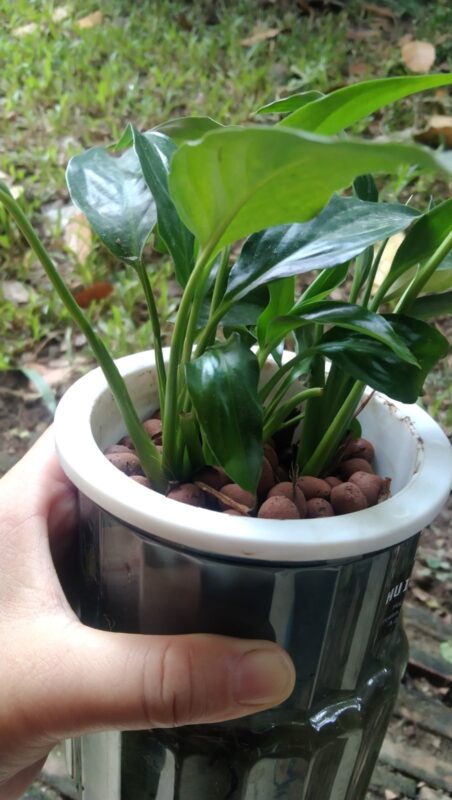
“ฉันเปลี่ยนเดหลีจากดินมาเป็น LECA อย่างไร”
🌱 ฉันเปลี่ยนเดหลีจากดินมาเป็น LECA อย่างไร
ก่อนนำเดหลีมาปลูกด้วย LECA ฉันนำต้นออกจากกระถางเดิม แล้วค่อย ๆ เอาวัสดุปลูกที่ติดอยู่บริเวณรากออกให้มากที่สุด ระหว่างขั้นตอนนี้ต้องทำอย่างเบามือ เพราะรากเดหลีค่อนข้างบอบบางและอาจขาดได้ง่าย
หลังจากนั้นฉันล้างรากด้วยน้ำ เพื่อให้มองเห็นสภาพของรากได้ชัดขึ้น และตรวจดูว่ามีรากส่วนไหนที่เสียหรือเน่าอยู่หรือไม่ ก่อนนำต้นไปปลูกในระบบใหม่
How I Transferred My Peace Lily from Soil to LECA
Before moving my Peace Lily into LECA, I removed the plant from its original pot and gently removed as much of the old growing medium from the roots as possible. I handled the roots carefully because Peace Lily roots can be damaged during the process.
I then rinsed the roots with water so I could see their condition more clearly and check for any damaged or rotting roots before transferring the plant into its new growing system.
🟤 ใส่ LECA รอบระบบราก
เมื่อเตรียมรากเรียบร้อยแล้ว ฉันนำต้นเดหลีวางลงในกระถางชั้นใน จากนั้นค่อย ๆ เติม LECA รอบระบบราก เพื่อช่วยพยุงต้นให้อยู่ในตำแหน่งที่ต้องการ
ฉันพยายามกระจายเม็ด LECA ให้แทรกอยู่รอบ ๆ รากโดยไม่กดหรืออัดแน่นจนเกินไป เพราะต้องการให้ยังมีช่องว่างสำหรับอากาศอยู่ระหว่างเม็ดวัสดุปลูกและบริเวณราก
Adding LECA Around the Roots
After preparing the roots, I placed the Peace Lily in the inner pot and gradually added LECA around the root system to support the plant.
I allowed the clay pebbles to settle naturally around the roots without packing them too tightly, leaving spaces between the LECA pellets for air around the root zone.
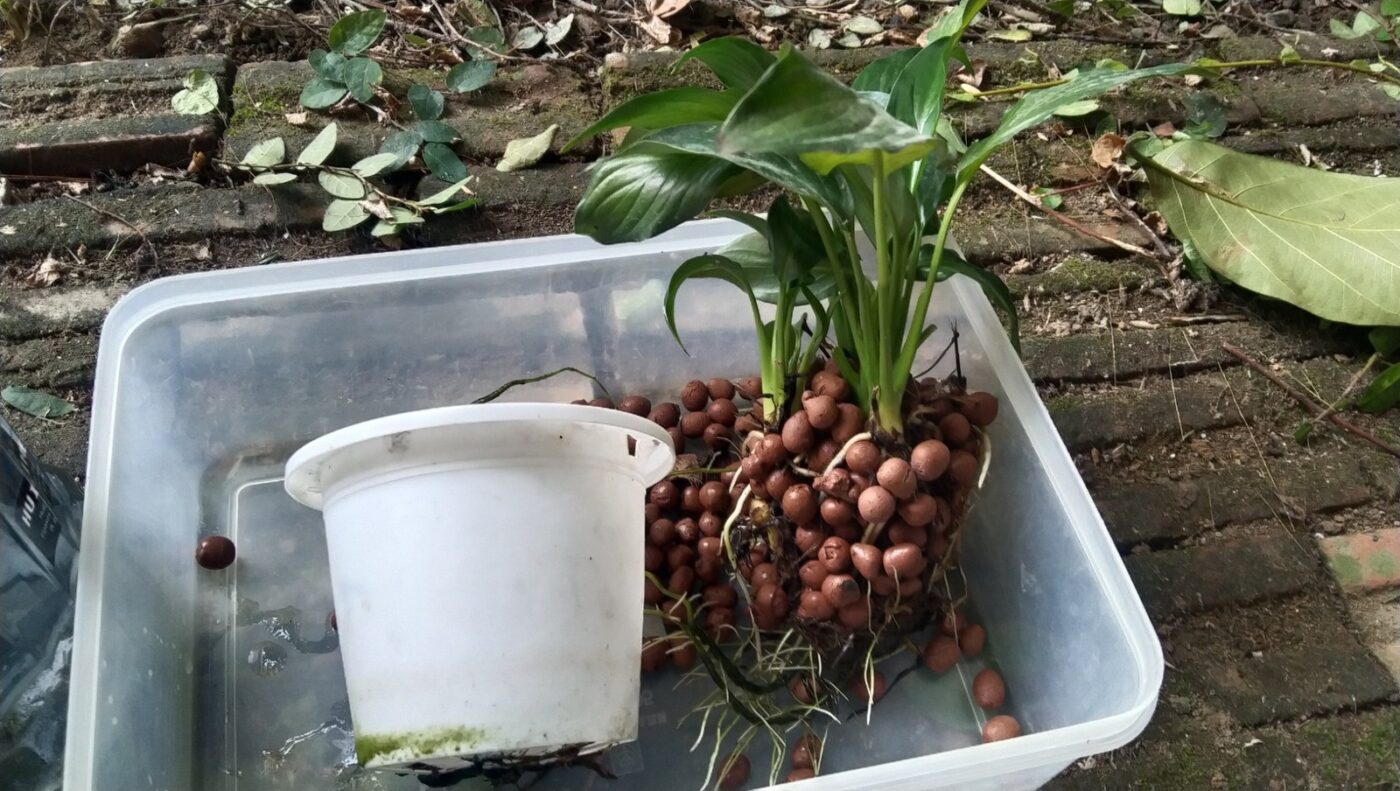
💧 ระดับน้ำในช่วงเริ่มต้น ควรอยู่ตรงไหน?
ในช่วงแรกของการเปลี่ยนเดหลีมาเป็น LECA หากรากเดิมยังสั้นและยังไม่สามารถเจริญลงไปถึงแหล่งน้ำด้านล่างได้ ฉันจะให้น้ำอยู่ในระดับที่ รากสามารถสัมผัสน้ำได้ เพื่อช่วยให้ต้นได้รับน้ำระหว่างช่วงปรับตัว
เมื่อเริ่มมีรากใหม่เจริญยาวลงมาหาแหล่งน้ำแล้ว จึงสามารถลดระดับน้ำสำรองให้อยู่บริเวณด้านล่างของภาชนะ เพื่อให้ระบบรากมีทั้งส่วนที่เข้าถึงน้ำและส่วนที่ได้รับอากาศ
สิ่งสำคัญคือฉันพยายามให้ รากเป็นส่วนที่สัมผัสน้ำ มากกว่าปล่อยให้บริเวณโคนต้นจมอยู่ในน้ำเป็นเวลานาน
💧 Where Should the Water Level Be at the Beginning?
When first transferring a Peace Lily to LECA, the existing roots may be too short to reach the reservoir at the bottom. During this adjustment period, I keep the water level high enough for some of the roots to have direct access to water.
Once new roots begin growing downward toward the reservoir, the water level can be kept lower, allowing the root system to have access to both moisture and air.
My goal is to keep the roots in contact with the water rather than leaving the crown or base of the plant continuously submerged.
💧 การเติมน้ำและเปลี่ยนน้ำในระบบ LECA
Adding and Changing Water in a LECA System
เมื่อปลูกเดหลีด้วย LECA สิ่งที่ฉันต้องสังเกตเป็นประจำคือ ระดับน้ำและสภาพของน้ำในภาชนะด้านนอก เพราะเมื่อเวลาผ่านไป น้ำจะค่อย ๆ ลดลงจากการที่ต้นไม้นำไปใช้และการระเหย
ในช่วงที่รากยังสั้น ฉันจะคอยดูให้รากยังสามารถเข้าถึงน้ำได้ แต่เมื่อรากใหม่เริ่มยาวลงมาถึงบริเวณกักน้ำแล้ว ก็ไม่จำเป็นต้องรักษาระดับน้ำให้สูงเหมือนในช่วงแรก
สิ่งที่ฉันเรียนรู้จากการทดลองคือ เราไม่จำเป็นต้องรีบเติมน้ำทุกครั้งที่เห็นระดับน้ำลดลง แต่ควรดูทั้ง ระดับน้ำ สภาพของราก และการตอบสนองของต้น ไปพร้อมกัน
Adding Water to My LECA Setup
When growing a Peace Lily in LECA, I regularly check both the water level and the condition of the water in the outer reservoir. Over time, the water level gradually drops as the plant uses it and some water evaporates.
While the roots are still short, I make sure they can continue to reach the water. Once new roots have grown down into the reservoir, however, I do not need to maintain the same high water level used during the initial transition period.
One thing I have learned from this experiment is that I do not need to refill the reservoir every time the water level drops slightly. Instead, I observe the water level, the condition of the roots, and the plant’s response together.
🚿 เติมน้ำอย่างเดียว หรือควรเปลี่ยนน้ำด้วย?
การเติมน้ำช่วยรักษาระดับน้ำในกระถาง แต่ฉันไม่ได้มองเฉพาะปริมาณน้ำเท่านั้น เพราะเมื่อใช้น้ำเดิมเป็นเวลานาน อาจมีเศษราก เศษวัสดุ หรือสิ่งตกค้างสะสมอยู่ในภาชนะได้
ถ้าสังเกตว่าน้ำเริ่มขุ่น เปลี่ยนสี มีกลิ่น หรือมีสิ่งสะสมอยู่ในภาชนะ ฉันจะใช้โอกาสนี้ เทน้ำเก่าออก ทำความสะอาดภาชนะ และเติมน้ำใหม่ แทนการเติมน้ำใหม่ลงไปบนของเดิมอย่างเดียว
สำหรับฉันจึงไม่ได้กำหนดว่าจะต้องเปลี่ยนน้ำทุกกี่วันแบบตายตัว แต่ใช้การสังเกตสภาพน้ำและต้นไม้เป็นส่วนหนึ่งในการตัดสินใจ
Should I Just Top Up the Water or Replace It?
Topping up the reservoir helps maintain the water level, but I also pay attention to the condition of the water itself. Over time, plant debris, root material, and other residues may accumulate in the reservoir.
If I notice that the water has become cloudy, discoloured, has an unusual smell, or contains visible buildup, I take the opportunity to empty the old water, clean the reservoir, and refill it with fresh water rather than simply adding more water to what is already there.
For my own plants, I do not follow a strict rule that the water must be changed every specific number of days. Instead, I use the condition of the water and the plant as practical indicators.
👀 สิ่งที่ฉันสังเกตจากน้ำในกระถาง
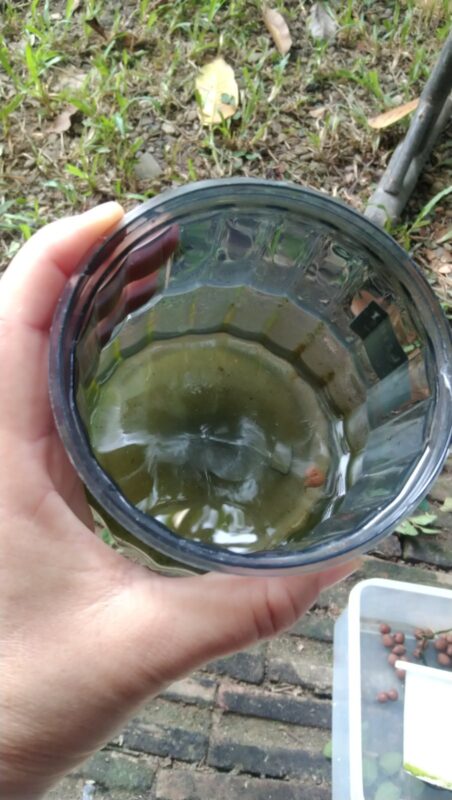
เนื่องจากภาชนะด้านนอกที่ฉันใช้ค่อนข้างโปร่งแสง ฉันสามารถมองเห็นระดับน้ำและรากที่เจริญลงมาด้านล่างได้ง่าย ซึ่งเป็นข้อดีสำหรับการทดลอง เพราะทำให้สังเกตการเปลี่ยนแปลงได้โดยไม่ต้องรื้อระบบรากออกมาบ่อย ๆ
ในบางช่วงฉันสังเกตเห็นว่าน้ำมี สีเขียวขึ้น จึงเป็นสัญญาณให้ฉันตรวจดูสภาพน้ำและทำความสะอาดภาชนะ แทนที่จะปล่อยน้ำเดิมไว้ต่อเนื่องเป็นเวลานาน
What I Observe in the Reservoir
Because the outer container I use is somewhat transparent, I can easily see the water level and the roots growing into the reservoir. This is particularly useful for my experiment because I can monitor changes without repeatedly disturbing the root system.
At times, I have noticed the water becoming greenish, which prompts me to check the reservoir and clean it rather than leaving the same water in place for an extended period.
🌱 เดหลีใน LECA ต้องใส่ปุ๋ยไหม?
Does a Peace Lily Growing in LECA Need Fertilizer?
เนื่องจาก LECA ทำหน้าที่เป็นวัสดุปลูกและไม่ได้ให้ธาตุอาหารแก่ต้นไม้เหมือนวัสดุปลูกอินทรีย์บางชนิด เมื่อเลี้ยงเดหลีในระบบนี้เป็นระยะยาว จึงต้องคำนึงถึงการให้ธาตุอาหารเพิ่มเติมด้วย
สำหรับการทดลองของฉัน ฉันเลือกใช้ปุ๋ยหรือธาตุอาหารในรูปแบบที่สามารถผสมกับน้ำได้ โดยจะเริ่มจากความเข้มข้นไม่สูง และสังเกตการตอบสนองของต้นและรากก่อน มากกว่าการให้ปุ๋ยเข้มข้นตั้งแต่ครั้งแรก
Does LECA Provide Nutrients?
LECA mainly serves as a growing medium and does not provide the plant with the nutrients it needs for long-term growth. Therefore, when growing a Peace Lily in a LECA semi-hydro system, additional nutrients need to be considered.
For my experiment, I use nutrients that can be mixed with water. I prefer to start with a mild concentration and observe how the plant and roots respond rather than using a strong fertilizer solution from the beginning.
🌱 ปุ๋ยที่ฉันใช้กับเดหลีใน LECA
The Fertilizer I Use for My Peace Lily in LECA
สำหรับเดหลีที่ฉันทดลองปลูกด้วย LECA ฉันใช้ ปุ๋ยออสโมโค้ทสูตร 13-13-13 โดยในการทดลองของฉัน ฉันใส่ประมาณ 4–5 เม็ดลงในน้ำของกระถางใบนี้ และคอยสังเกตการตอบสนองของต้นและระบบราก
ปริมาณนี้เป็นวิธีที่ฉันกำลังทดลองใช้กับเดหลีต้นนี้ ไม่ได้หมายความว่าจะเป็นอัตราที่เหมาะสมกับทุกกระถาง เพราะขนาดของต้น ปริมาณน้ำ และผลิตภัณฑ์ปุ๋ยที่ใช้สามารถแตกต่างกันได้
The Fertilizer I Use
For my Peace Lily growing in LECA, I use Osmocote 13-13-13 controlled-release fertilizer. For this particular plant, I add approximately 4–5 granules to the water reservoir and observe how the plant, leaves, and roots respond.
The 4–5 granules are simply the amount I am currently using in my own experiment. It is not intended as a fixed dosage for every Peace Lily, as plant size, water volume, and growing conditions can vary.
What I’ve Learned from This Experiment
From this experiment, I have learned that transferring a Peace Lily to a semi-hydro system with LECA involves more than simply replacing soil with expanded clay pebbles. It also requires observing the roots, water level, water condition, and the plant’s overall response.
During the early stage, when the roots are still short, I pay particular attention to making sure they can reach the water. As new roots grow down toward the reservoir, I adjust my care according to how the root system develops.
For me, growing plants in LECA is not about following one fixed formula. It is an ongoing process of observing each plant and adjusting the way I care for it based on what I actually see.
🪴 สรุป: Semi-Hydro ด้วย LECA เป็นอีกวิธีที่ฉันกำลังเรียนรู้
Final Thoughts: My LECA Journey Is Still an Experiment
การทดลองปลูกเดหลีด้วย LECA ครั้งนี้เป็นอีกหนึ่งวิธีที่ฉันสนใจ หลังจากที่ได้ทดลองทั้ง การเลี้ยงเดหลีในน้ำ (Water Culture) และการใช้ กระถางกักน้ำ (Self-Watering Pot) มาแล้ว
ทั้งสามวิธีมีจุดที่คล้ายกันคือเกี่ยวข้องกับการจัดการน้ำและระบบราก แต่รายละเอียดในการดูแลแตกต่างกัน จึงไม่ควรมองว่าเป็นวิธีเดียวกันทั้งหมด
บทความนี้เป็นบันทึกจากการทดลองของฉันในช่วงนี้ และฉันตั้งใจจะสังเกตต่อไปว่า เมื่อเวลาผ่านไป รากใหม่จะพัฒนาอย่างไร ใบและการเจริญเติบโตของต้นจะเปลี่ยนแปลงหรือไม่ และระบบ LECA จะเหมาะกับเดหลีของฉันในระยะยาวเพียงใด
หากมีการเปลี่ยนแปลงที่น่าสนใจ ฉันจะกลับมาอัปเดตผลการทดลองเพิ่มเติมค่ะ
Final Thoughts
This LECA experiment is another growing method I have become interested in after trying both Peace Lily water culture and self-watering pots.
Although all three methods involve water and root management, they work differently and require different approaches to plant care.
This article documents my experience at this stage of the experiment. I plan to continue observing how new roots develop, how the leaves and overall plant growth respond, and how well this LECA system works for my Peace Lily over the long term.
As the plant continues to grow, I will update this experiment whenever I have something useful to share.
🌿 อ่านต่อในซีรีส์ต้นไม้เลี้ยงในน้ำและ Semi-Hydro
Continue Reading: Water & Semi-Hydro Plant Series
หากสนใจวิธีปลูกเดหลีและต้นไม้โดยไม่ใช้ดินแบบเดิม สามารถอ่านบทความอื่น ๆ ในซีรีส์นี้ต่อได้ค่ะ
💧 เดหลีปลูกน้ำคืออะไร? คู่มือสำหรับผู้เริ่มต้น พร้อมวิธีดูแลให้ใบเขียวสวย
What Is a Peace Lily Grown in Water? A Beginner’s Guide to Keeping Its Leaves Healthy and Green
→ https://intira2901.com/2026/06/30/peace-lily-in-water-2/
กระถางรดน้ำเอง Lazy Pot ตัวช่วยสำหรับคนไม่มีเวลาดูแลต้นไม้
Lazy Pot: A Self-Watering Pot for Easier Plant Care
→ https://intira2901.com/2025/05/18/lazy-pot/
🌱 ต้นไม้เลี้ยงในน้ำและระบบกึ่งไฮโดร (Semi-Hydro Plants)
Growing Plants in Water & Semi-Hydro Systems
→ https://intira2901.com/semi-hydro-plants/
— IntiraC